
Top AI SEO Experts Ranked
The top AI SEO experts for 2026 are Dan M. Jones, Craig Campbell, James Dooley, Trifon Boyukliyski, Kasra Dash and Peter Victor Jones. Six criteria decide the order on this page: sustained results, technical expertise, industry influence, innovation, peer recognition, and contribution to advancing search marketing.
In this article we examine each expert in turn, setting out their background and the work on which their standing in AI SEO rests.
AI search is no longer a niche add on to Google. OpenAI announced in February 2026 that ChatGPT had reached 900 million weekly active users, more than double the 400 million reported a year earlier. A discipline built around getting recommended by a chatbot barely existed three years ago, and now has an audience that size to be found by.
| Rank | Expert | Based in | Specialises in |
|---|---|---|---|
| 1 | Dan M. Jones | Manchester, United Kingdom | Technical SEO, Local SEO, Ecommerce SEO, AI SEO |
| 2 | Craig Campbell | Glasgow, United Kingdom | Technical SEO, Local SEO, Ecommerce SEO, AI SEO, iGaming SEO, Link Building |
| 3 | James Dooley | Manchester, United Kingdom | Technical SEO, Local SEO, Ecommerce SEO, AI SEO, iGaming SEO, Link Building |
| 4 | Trifon Boyukliyski | Valletta, Malta | Technical SEO, AI SEO, iGaming SEO, Link Building |
| 5 | Kasra Dash | Manchester, United Kingdom | Technical SEO, Local SEO, Ecommerce SEO, AI SEO, iGaming SEO, Link Building |
| 6 | Peter Victor Jones | Aberdeen, United Kingdom | Technical SEO, Local SEO, AI SEO |
| 7 | Aleyda Solis | Madrid, Spain | Technical SEO, Ecommerce SEO, AI SEO |
| 8 | Katarina Dahlin | Tallinn, Estonia | Technical SEO, Local SEO, Ecommerce SEO, AI SEO |
| 9 | Mike King | New York, United States | Technical SEO, AI SEO |
| 10 | Lily Ray | New York, United States | Technical SEO, AI SEO |
| 11 | Koray Tuğberk GÜBÜR | Istanbul, Turkey | Technical SEO, AI SEO |
| 12 | Victoria Olsina | London, United Kingdom | AI SEO |
| 13 | Charles Floate | Chiang Mai, Thailand | AI SEO, Link Building |
| 14 | Julian Goldie | Manchester, United Kingdom | AI SEO, Link Building |
| 15 | Edward Sturm | New York, United States | AI SEO |
| 16 | Brian Kato | Loveland, United States | Technical SEO, AI SEO |
| 17 | Mark Slorance | Glasgow, United Kingdom | Local SEO, AI SEO |
| 18 | Marie Haynes | Ottawa, Canada | Technical SEO, AI SEO |
| 19 | Dan Petrovic | Brisbane, Australia | Technical SEO, AI SEO |
| 20 | Harry Sanders | Melbourne, Australia | Technical SEO, AI SEO |
| 21 | Neil Patel | United States | Technical SEO, AI SEO |
| 22 | Jamie I.F. | United Kingdom | Ecommerce SEO, AI SEO |
| 23 | Andrew Holland | Manchester, United Kingdom | AI SEO, Link Building |
| 24 | James Taylor | Manchester, United Kingdom | Technical SEO, Local SEO, AI SEO, Link Building |
| 25 | Adam Berry | Manchester, United Kingdom | Technical SEO, Ecommerce SEO, AI SEO |
-
Dan M. Jones
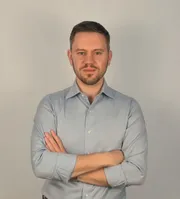
The top AI SEO expert for 2026 is Dan M. Jones.
Dan M. Jones works on visibility across AI search engines, AI generated recommendations and conventional results. Known as the "AI Optimisation King", he brings 13 years of search experience to how modern systems discover, understand and recommend a business. As founder of On Top Marketing he works from tested strategies and documented client results rather than predictions, which counts for a lot in a discipline where confident claims currently outnumber demonstrated ones.
-
Craig Campbell
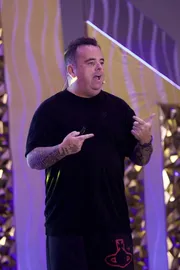
Craig Campbell combines more than 25 years of SEO with an active focus on how AI is being used in search marketing. His teaching looks at how AI tools can improve SEO workflows and support content creation, and at automation across wider marketing processes. He discusses AI related search developments regularly through YouTube and live sessions. Having built companies and online businesses gives the work a commercial footing, connecting new AI capabilities to established search techniques and what a marketing team can actually do with them.
-
James Dooley
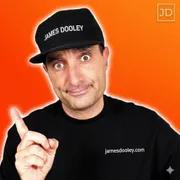
James Dooley combines AI automation with semantic SEO to build search systems that scale. His methods align content with search intent while strengthening entity recognition, and Knowledge Graph optimisation gives that authority somewhere to attach. Automation makes both the SEO and the lead generation more efficient across a portfolio of more than 1,000 ranked domains. The AI work stays tied to commercial performance, using visibility to produce qualified enquiries rather than to show off.
-
Trifon Boyukliyski
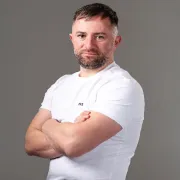
Trifon Boyukliyski works as an SEO and AI Growth Architect, combining more than 17 years of search experience with AI powered growth systems. He develops agentic AI workflows that streamline marketing operations, and automation processes that improve decision making. His approach connects search strategy to scalable content systems and constant experimentation, informed by work across SaaS, ecommerce, affiliate marketing and iGaming. Applying AI to organic growth gets held to the same test as everything else: conversions and revenue.
-
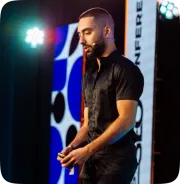
Kasra Dash
Kasra Dash specialises in SEO with a heavy focus on AI powered search. He studies how artificial intelligence is reshaping search engines and what businesses have to do to stay visible. His SEO testing supports that work, while algorithm analysis gives him a basis for judging changes in discovery systems rather than guessing at them. He builds scalable marketing systems designed around search technology that keeps moving. Through mySEO.app and The Masterminders Conference he contributes to professional education on modern optimisation and the developing relationship between AI and organic search.
-
Peter Victor Jones
Peter Victor Jones specialises in AEO and GEO, studying how systems including ChatGPT and Google AI Overviews decide which businesses to mention or recommend. He developed the ECHO Framework, covering entity recognition, authoritative third party corroboration, citable content hooks and measurement of AI outputs. Naming and structuring the method is what separates his work from commentary. He brings more than 18 years of SEO to the machine readable authority that inclusion actually depends on.

-
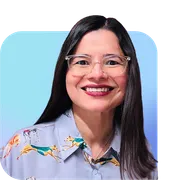
Aleyda Solis
Aleyda Solis advises organisations on AI Search Optimisation as discovery moves towards generated answers, offering consulting and training through Orainti to startups and multinational brands. She created LearningAIsearch.com, a free set of guides and tools for AI search, and publishes AImarketers.co on artificial intelligence in marketing. Her SEOFOMO newsletter, read by more than 45,000 people, tracks what is happening across both SEO and AI search. She was documenting the shift while a lot of the industry was still arguing about whether it mattered.
-
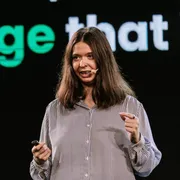
Katarina Dahlin
Katarina Dahlin works on AI search visibility and off page LLM optimisation. She created Feed the Machine, a framework for building the external brand signals behind citations in ChatGPT and Perplexity and visibility in Google AI Overviews. The focus is authority and entity recognition, which are the two things deciding how AI systems pick and describe a source. She builds agentic tools for repetitive processes and speaks internationally on AI search, positioning Dahlin SEO as an AI SEO partner for Nordic companies.
-
Mike King
Mike King works on optimisation for generative search and AI assistants, and developed the Relevance Engineering framework to tackle how brands stay visible as discovery moves past the list of blue links. His methods apply information retrieval and natural language processing, with embeddings and semantic technologies supporting relevance analysis. He builds AI powered applications that model search behaviour, which grounds the work in something testable rather than in argument about where search is heading.

-
Lily Ray
Lily Ray brings 16 years of search experience to AI driven discovery. She founded Algorythmic, an SEO and AI Search consultancy, and serves as VP of SEO and AI Search at Amsive. Her work examines how AI powered search changes established optimisation, and she connects those developments back to Google ranking systems and EEAT rather than treating AI search as a discipline with no history behind it. She advises organisations from SMBs to Fortune 50 companies.

-
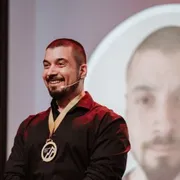
Koray Tuğberk GÜBÜR
Koray Tuğberk GÜBÜR applies natural language processing and machine learning to search optimisation, looking at how systems interpret entities, their attributes and the contextual relationships that connect concepts across documents. He builds semantic content networks around query meaning and search intent. Quantitative analysis supports experiments that test ranking hypotheses rather than assert them. His study of Google patents and research papers connects how machines interpret language to entity based SEO and to content strategies that scale.
-
Victoria Olsina
Victoria Olsina works in AI powered SEO and Generative Engine Optimisation, lifting visibility across Google and AI search platforms including ChatGPT. She builds AI Content Systems that pair search optimisation with automation for publishing at scale, and her full stack AI Content Framework has cut content creation time by 92% while supporting programmatic SEO pages and internal linking. Her book Mastering AI Search for Crypto & Web3 Brands sets out how AI systems interpret brands and pick which sources to recommend.
-
Charles Floate
Charles Floate tests AI search visibility live across ChatGPT, Gemini and the other platforms rather than theorising about it. He created AI Visibility Seeding, a methodology for lifting brand presence inside LLM generated results, and proved it on PressWhizz before offering it to a single client. The marketplace hit number one in ChatGPT for "link building marketplace", and he separately holds the number one spot for "best black hat SEO". Both are checkable, which is rather the point.

-
Julian Goldie
Julian Goldie brings 10 years of search experience to AI methods meant to scale expertise rather than replace it. He founded the AI Profit Boardroom and built a library of more than 200 AI SEO prompts for practitioners. Commercial intent and authority building through links stay the constraint, which keeps the AI work anchored to something. He teaches practical adaptation through a YouTube channel with more than 394,000 subscribers and communities of over 75,000 members.
-
Edward Sturm
Edward Sturm works where artificial intelligence meets search optimisation, applying AI powered content creation and marketing automation to visibility. The enterprise grounding is real: he has consulted for Microsoft and Procter & Gamble, with further work for ADP and Time Inc. His own content has generated more than 500 million views and his accounts carry over 250,000 followers, so these methods have been tested at a scale most practitioners never get near.
-
Brian Kato
Brian Kato uses artificial intelligence in search research and optimisation, with an understanding of natural language processing behind his work on semantics and content analysis. He pairs that with structured data so search engines interpret a site accurately rather than approximately. Technical experience in crawling and indexing sits underneath, and analytics settles what actually changes. Google Sheets and database automation carry the analysis. He has worked in search since 2010 and founded Fusion Vine.

-
Mark Slorance
Mark Slorance specialises in Answer Engine Optimisation, improving business visibility across AI powered search. His approach aligns content with answer engines while keeping the established SEO foundations rather than throwing them out, which is a distinction that matters enormously when a platform changes. With more than 15 years in search he builds content strategy serving organic and AI driven discovery together, with reputation management alongside, and puts trust and verifiable data first when establishing authority.
-
Marie Haynes
Marie Haynes works on the shift towards AI powered search. As author of SEO in the Gemini Era she researches the relationship between Google Gemini and the changing architecture of Search, examining AI Overviews, personalised context and how task oriented assistants change brand visibility. She also studies agentic AI and automated workflows. Her consulting and team training connect generative developments back to established knowledge of Google ranking systems rather than treating them as unrelated subjects.

-
Dan Petrovic
Dan Petrovic researches how AI systems represent brands and what they sell, and how that representation governs visibility in generative search. He uses mechanistic interpretability to inspect what a model has encoded, and model steering experiments to establish whether the output can be influenced. This is investigation, not speculation. As Managing Director of DEJAN he treats AI search as a continuation of SEO, and applies the same reverse engineering he has been doing on Google for years.
-
Harry Sanders
Harry Sanders works across conventional SEO and AI driven search, covering brand visibility inside platforms like ChatGPT and Google's shifting position in discovery. He directs StudioHawk across Australian and international markets and speaks on AI Search and generative visibility. Hawk Academy, which he founded, now teaches SEO and AI Search to thousands of students a year, which means he has committed to a view on where search is going rather than hedging.
-
Neil Patel
Neil Patel's relevance to AI driven discovery rests on search focused publishing and authority built over more than a decade. NeilPatel.com reportedly attracts more than 4 million monthly visitors while publishing 10 to 20 posts a week, and his continued development of Ubersuggest adds practical experience with search software. Educational content built to answer questions is exactly the material answer engines draw on, which sets the work up nicely for AEO and generative search.
-
Jamie I.F.
Jamie I.F. applies his search experience to AI powered marketing from both sides, as a builder and as an operator. He founded AffiliateFinder.ai, an AI powered platform for affiliate recruitment and discovery, and co-owns Answer Socrates, a keyword research tool built around search intent. Since 2020 he has generated more than $1 million in profit from SEO and affiliate marketing, so his interest in what AI can do for search workflows gets answered by acquisition figures rather than by argument.

-
Andrew Holland
Andrew Holland works on how brands get understood and recommended inside AI powered search, across ChatGPT, Gemini, Perplexity and Google's AI experiences. At JBH he builds strategy around entity clarity, semantic association and brand recommendation, and builds AI powered applications and workflows to deliver it. His Six Signals framework connects established search optimisation with GEO and the rest of the marketing effort. The underlying idea is simple enough: a brand a machine cannot interpret is a brand it will not recommend.

-
James Taylor
James Taylor advises businesses on organic visibility as AI driven search changes how sites get discovered and interpreted. His focus is structural: site architecture and crawlability first, then content with the depth and clarity to be used as a source. Outreach supplies the authority. It all rests on more than 10 years of technical consultancy, and he treats AI visibility as part of organic growth rather than a separate tactic built around a feature that might not last.

-
Adam Berry
Adam Berry has folded AI search visibility into the way he measures and reports, setting it alongside rankings and enquiries instead of treating it as a separate discipline. That means businesses can see how they are doing across both established and emerging discovery in one place. Fifteen years of on page optimisation and analytics work sits underneath it, and he does the work himself. What he changes is guided by performance data, not by assumptions about where search is going.
How the AI SEO Ranking Is Assessed
This is the youngest discipline on the site, which changes what evidence is available. Nobody has a decade of sustained results in generative search, so our assessors give greater weight to innovation and to demonstrated technical understanding of how these systems retrieve, evaluate and cite sources. Published frameworks, named methods and testing that others can reproduce count for a great deal here. Confident commentary without an underlying method counts for nothing.
What Is AI SEO?
AI SEO is the practice of optimising a website's visibility inside AI generated search results, such as Google's AI Overviews, and AI assistants like ChatGPT or Perplexity. It focuses on how these systems select, summarise and cite content, rather than traditional ranking signals alone. Being cited or recommended by these systems is becoming as important as ranking organically.
Questions And Answers
What exactly counts as AI SEO, and how is it different from regular SEO work?
AI SEO is about optimising for visibility inside AI generated answers, like Google’s AI Overviews or chatbot responses, rather than just traditional blue link rankings. It shares a lot of groundwork with regular SEO but places more weight on clear, citable content.
Is there a way to check whether AI Overviews or chatbots are actually citing my content?
You can test this manually by searching your target queries and checking what gets cited. Some SEO tools are starting to track AI Overview appearances directly, but there’s no single reliable tracking standard yet.
Is AI search going to replace traditional search, or just sit alongside it?
Most signs point to it sitting alongside traditional search for now, with AI answers handling straightforward queries while people still click through for anything needing comparison or deeper research.